
Of Sun Tzu, MiG Alley, and Supply Chain Shadows
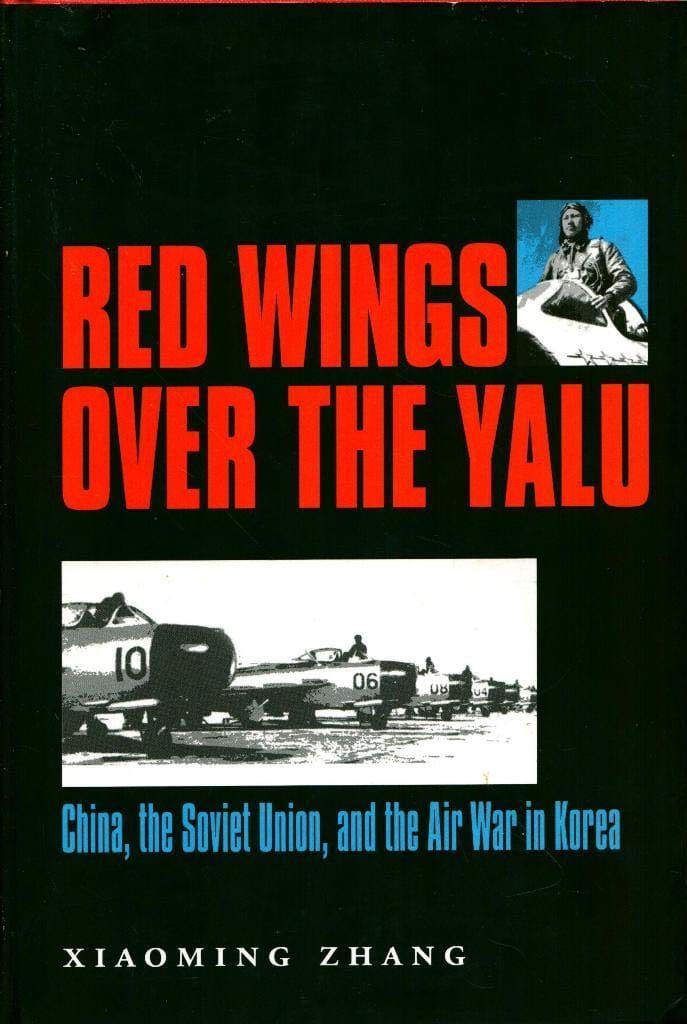
In 2008, I sat in a military strategy seminar that blurred the line between classroom and clandestine briefing. Military and national strategy, taught by Dr. Xiaoming Zhang of the U.S. Air War College—an academic with a penchant for Sun Tzu, an accent that leaned scholarly, and an intellect sharp enough to write footnotes in origami.
Zhang, son of a rumored PLA pilot who flew covert missions with North Korea, authored Red Wings over the Yalu, a rare take on the Korean air war through the eyes of the MiG pilots. In a field littered with Western narratives, his perspective was as uncommon as a North Korean defector in West Point.
His lectures were intellectual fencing matches. “Know yourself and know your enemy…” he’d intone, channeling Sun Tzu’s wisdom, “and you need not fear the result of a hundred battles.“ But he didn’t stop there. He’d nod and add, “All warfare is based on deception. When able to attack, seem unable…” Every argument was tested, stretched, sharpened. No ideological monologue allowed. You argued, or you learned.
I had other esteemed strategists instruct me—but none quite twisted my mind like Zhang. Through years combat leadership, operations planning, and strategy writing, I learned that strategic acumen isn’t inherited—it’s forged in the friction of contest. Zhang was an important whetstone.
Years later, he’d be scooped up by the FBI and plead guilty to making false statements about a relationship with a Chinese official. Public records go silent after that, and nobody seems to know if jail came next—or a fine, exit stage left, or quiet exile. He wasn’t a Bond villain—he was a flawed human with a brilliant mind. That ambiguity made him more real, not less.
Supply Lines: Where the Real Wars Are Fought
Fast forward to the present: the China that Zhang nuanced in lectures now headlines Pentagon briefings as the strategic predator. And it’s not just doctrine—it’s in our wiring.
Consider how counterfeit chips—some traced back to China—found their way into U.S. missile defense systems, forcing the Missile Defense Agency to spend nearly $4 million to root them out, as reported in WIRED. Or about the F‑35: Lockheed Martin halted production when Chinese-made magnets surfaced in its supply chain in 2023–24, according to Defense News.
China isn’t just shipping components—it’s choking off rare-earth minerals (think dysprosium, terbium) essential for radars, night-vision, electronics. Prices have spiked up to 60‑times previous levels, according to a Wall Street Journal piece, putting U.S. defense manufacturing on edge. Meanwhile, WIRED reports that Chinese encryption-chip firms like Hualan continue to slip sensitive processors into NASA, NATO, even U.S. Navy gear—despite being on the Commerce Department’s Entity List. Let’s not forget Chinese-made lidar sensors that may carry firmware backdoors—a literal blind spot on the battlefield if co-opted, according to Reuters.
“Let your plans be dark and impenetrable as night, and when you move, fall like a thunderbolt.” This isn’t just strategy—it’s the playbook of a state executing industrial infiltration.
The Department of Defense now uses tools like Section 1260H (a mandated catalog of Chinese military-linked firms) and the Global Investment and Economic Security (GIES) office to root out these vulnerabilities—because the battlefield isn’t just physical—it’s in contracts, circuit boards, and silicon.
Full Circle: Strategy, Supply, and the Student Who Learned Too Well
I often wonder what Zhang would say about our current industrial minefields. Would he savor the irony that “Supreme excellence consists of breaking the enemy’s resistance without fighting?” And that our most insidious wars today aren’t won with bombs—they’re won in boardrooms, by spotting the tainted chip before it locks up a missile.
That lesson is now woven into my strategic DNA. I’ve built plans, written operational strategy, counseled decision makers—all through the lens that the most dangerous threats are those you don’t recognize. Classrooms end, but those early push-and-parry sessions with Zhang linger.
And to any reader fretting that studying under Zhang might subject you to taint—relax. Unless you’ve been dispensing MiG-fuel for espionage, you’re clean. His class was controlled exposure to a worldview we’ve spent entire careers guarding against. In my case, it became one more layer in an unconventional education—blending cockpit pressure, policy alchemy, tough planning, and yes, dark-humored espionage novels (fictional) come to life.
Member discussion